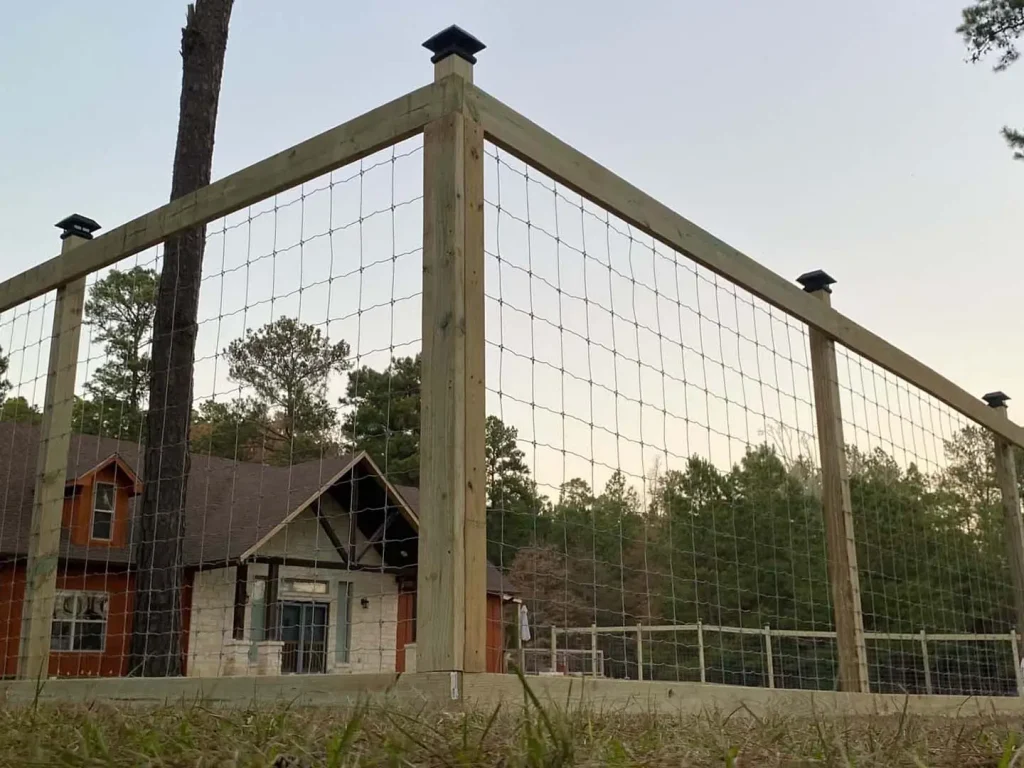
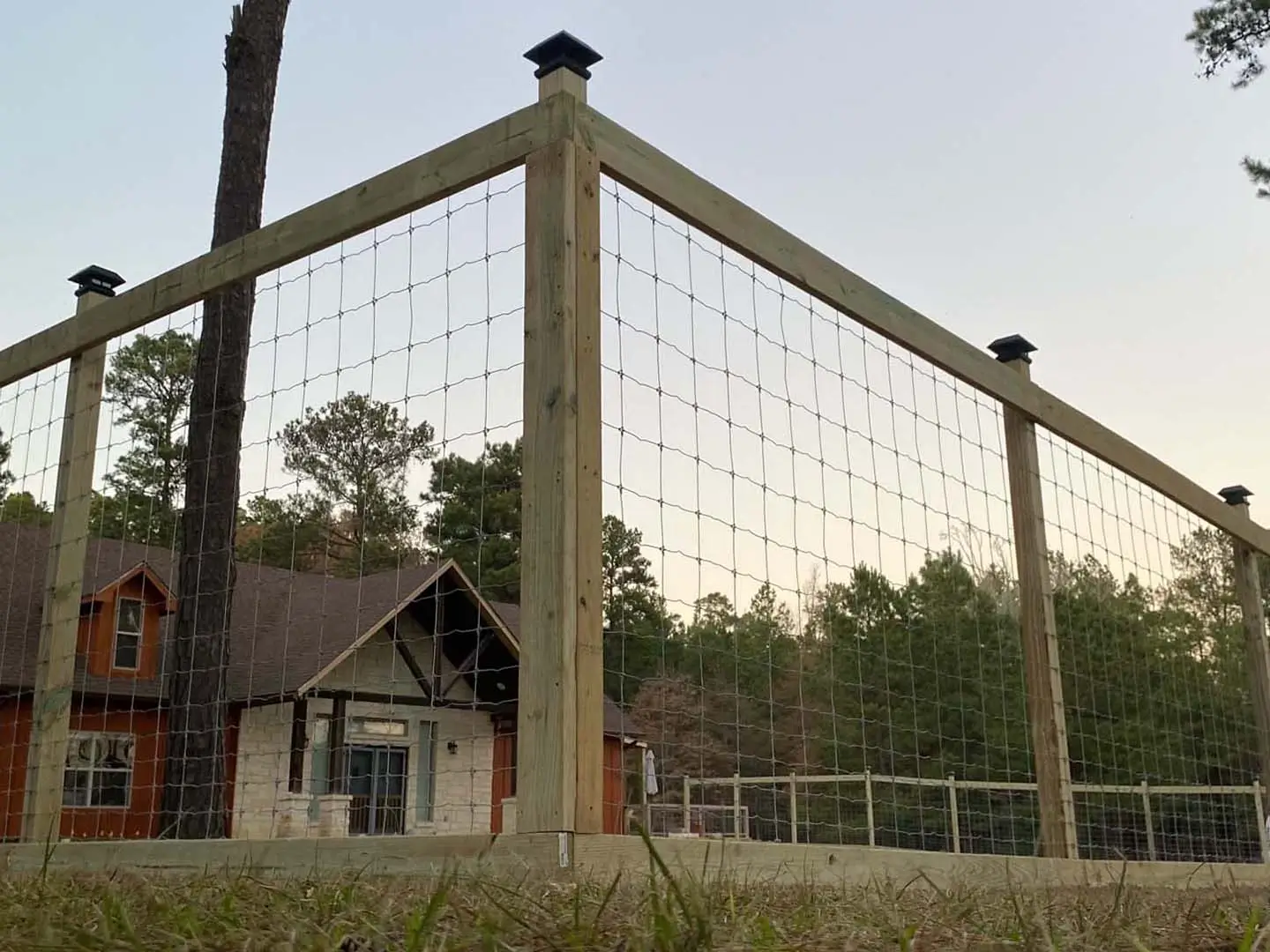
Agricultural fencing does more than mark property lines. It protects livestock, secures crops, manages grazing, and helps landowners get the most from their property. Whether you own a small hobby farm outside Lufkin or manage hundreds of acres across East Texas, choosing the right fence can make daily operations safer and more efficient.
As a top-rated East Texas fence company, Blume & Son Construction, we’ve worked with property owners throughout Lufkin and the surrounding communities for more than 22 years. We understand the unique challenges that come with fencing land in the Piney Woods, from rolling terrain and heavy vegetation to humid weather and frequent storms.
Why Agricultural Fencing Matters in East Texas
East Texas presents challenges that aren’t found everywhere. Long growing seasons, abundant rainfall, clay soils, dense tree lines, and active wildlife all affect how agricultural fencing performs over time.
A properly designed East Texas agricultural fence helps:
- Keep livestock safely contained
- Protect crops and gardens
- Define property boundaries
- Divide pastures for rotational grazing
- Reduce maintenance costs
- Improve the overall functionality of your land
Whether your property is located near Lufkin, Huntington, Diboll, Hudson, or elsewhere in Angelina County, investing in quality fencing helps protect your operation for years to come.
Choosing the Right Fence for Your Livestock
Different types of livestock require different fencing solutions. The best choice depends on the animals you raise, how you manage your property, and the conditions your fence will need to withstand throughout the year.
Long, humid summers, frequent rainfall, and occasional severe weather make durability just as important as proper livestock containment. Choosing an East Texas agricultural fence that’s suited to both your operation and the local climate helps improve safety, reduce maintenance, and maximize the lifespan of your investment.
Cattle
High-tensile wire, woven wire, and pipe fencing are popular choices for cattle operations throughout East Texas. The right design depends on herd size, pasture layout, and how frequently animals are moved between grazing areas.
Horses
Horse fencing prioritizes visibility and safety. Smooth wire, wood fencing, and no-climb woven wire are common options because they reduce the risk of injury while creating attractive pasture boundaries.
Goats and Sheep
Goats are excellent escape artists. Woven wire fencing with smaller openings helps keep goats and sheep safely contained while discouraging predators from entering the pasture.
Poultry
Chickens, ducks, and other poultry often require fencing to deter predators such as raccoons, coyotes, foxes, and stray dogs, which are common throughout rural East Texas.
While livestock determines the type of fence you need, the layout and conditions of your property play an equally important role in how that fence should be designed.
Planning for East Texas Terrain
From rolling pastureland and dense Piney Woods to creek crossings and low-lying areas that collect water after heavy rains, the terrain can significantly influence how a fence should be designed and installed.
Clay soils, which are common throughout much of East Texas, can shift as moisture levels change, making proper installation techniques especially important for long-term stability.
Landowners should also consider how they use their property each day. For example, pastures may need to be divided for rotational grazing, while wooded acreage may require strategically placed gates for tractors, utility vehicles, or livestock trailers.
Planning for future improvements, such as expanding grazing areas or adding additional fencing, can also save time and money down the road.
Taking the time to design a fence around your property’s unique terrain helps create a fencing system that’s easier to maintain, better suited to daily operations, and built to perform for years in the East Texas climate.
Don’t Forget Gates and Access Points
A well-designed agricultural fence is only as functional as the gates built into it. Gates play an important role in how efficiently you manage your property each day.
Before installation begins, it’s worth thinking about how equipment and livestock move across your land. Tractor access, hay deliveries, utility vehicles, trailers, and livestock loading areas all influence where gates should be placed and how wide they need to be. A gate that’s too narrow or poorly positioned can make everyday tasks more difficult than they need to be.
If your property includes multiple pastures, strategically placed gates can also make rotational grazing and livestock management more efficient.
Planning gates with the same care as the fence itself creates a system that supports your operation today while remaining flexible for future growth.
Why East Texas Landowners Choose Blume & Son Construction
Every agricultural property has unique challenges, from the type of livestock you raise to the terrain and day-to-day demands of your operation. Choosing the right fence starts with understanding those factors.
For more than 22 years, Blume & Son Construction has helped landowners throughout Lufkin and East Texas install durable fencing designed to withstand the local climate while supporting the everyday needs of farms, ranches, and rural properties.
Whether you’re fencing a few acres or a large agricultural operation, our East Texas fence company will help you choose the right solution for your land.
Partner With An Expert Agricultural Fence Contractor
Whether you’re building new pasture fencing, replacing aging fence lines, or planning improvements for your farm or ranch, Blume & Son Construction is ready to help.
Contact our team today to schedule a consultation or call our team at (936) 305-9303. We’ll help you design an agricultural fencing system that fits your property, your livestock, and your long-term goals.